35 Booksellers were in attendance at SIBA Annual Meeting and Town Hall on Tuesday. The first half of the event was devoted to the "Annual Meeting" portion of the event, with brief updates from Kathy Bartson of Binc on the help the organization has been able to provide to Florida booksellers impacted by Hurricane Ian, and Ryan Quinn of the American Booksellers Association who announced the SIBA recipient of the 2023 Children's Institute Raffle winner, Amy Rishell of Pass Christian Books in Pass Christian, MS.
Executive Director Linda-Marie Barrett reported on the state of SIBA, noting that 2022 has been a "time of transition" as the country comes out of the pandemic. She reported bookstore membership was up by 11% and that SIBA was in a financially sound and stable position, while still maintaining an active and well-received programming schedule, including two well-attended in person events in Winston-Salem and New Orleans.
The SIBA Board reported on its continuing work to update SIBA's Bylaws to expand the number of Board members and allow for a wider range of business models in the definition of a "core member bookstore."
To apply, send resume to lindamarie@sibaweb.com
Hours per week: 10-15
Salary: $20/hr
Location: Remote with an ability to travel for conferences. Travel is paid for by SIBA
Responsible for presenting and selling SIBA promotions to our industry partners and new markets. This role will work closely with the SIBA team to support and enhance programming initiatives and meet sales goals.
Desired Experience:
Experience as a bookseller at an independent bookstore, or in publishing is a plus
Understanding of the bookselling industry and of the relationships between publishers, independent booksellers, and readers
Understanding of sales trends in the indie market
Excellent in-person and virtual communication skills
Responsibilities include but are not limited to:
pitch partnerships, sponsorships, and promotions to existing customers
target new partners to reach new and diverse audiences.
schedule, invoice, and provide any requested stats on promotions sold
Membership Relations Coordinator
To apply, send resume to lindamarie@sibaweb.com
Hours per week: average 10-15
Salary: $20/hr
Location: Remote with ability to travel for conferences. Travel is paid for by SIBA.
The SIBA Membership Relations Coordinator will work closely with the SIBA Executive Director, Communications and Systems Administrator, and Social Media Coordinator to encourage engagement in and recruitment to the SIBA regional trade association. The Membership Relations Coordinator will be a point of contact for SIBA members for troubleshooting issues within the industry or with SIBA and will facilitate making contact with additional members, the board, or industry contacts as needed.
Desired Experience:
Experience as an owner, manager or frontline bookseller at an independent bookstore is a plus
Demonstrate understanding of the bookselling industry and of the relationships between publishers, distributors, trade associations, authors, and independent bookstores
Membership in SIBA
Excellent in-person and virtual communication skills
Responsibilities include but are not limited to:
Regular (at minimum quarterly) outreach to all members, with particular focus on underserved segments of bookstores (including, but not limited to, BIPOC-owned, single operators, location independent, etc)
Act as a resource for booksellers who need assistance with industry connections (example: help a store make the connections to set up a publisher account, get a rep, find a scholarship, etc.)
Act as a resource for authors who need assistance connecting with member bookstores to promote their new work
Aid in educating members on the goals and purposes of SIBA as a regional trade association
Encourage members to attend conferences, virtual and in person education, rep picks, and other events
Maintain and update member database, including but not limited to following trade publications and store announcements for information on new or prospective store members, and updates on current members. If new, send welcome letter and invitation to join
Send appropriate email to stores when they are mentioned in publications
Create, in partnership with the SIBA team, and maintain a new membership welcome package
Send thank you email whenever dues are paid
check in with stores that have not attended events or made other contact with SIBA in the past 6 months
Posted By Nicki Leone,
Thursday, October 6, 2022
Updated: Thursday, October 20, 2022
Binc Issues Appeal to Help Florida Booksellers
The Book Industry Charitable Foundation has issued an appeal to the industry to contribute funds for bookseller relief after Hurricane Ian devastated southwest Florida this past week. In a release, Binc stated that “dozens of bookstores and comic shops” have closed temporarily, while others are trying to stay open despite having no power and dealing with damaged fixtures and lost inventory. Bookstore owners and employees in Florida are also contending with having to pay rent and buy essentials while also dealing with lost income due to Ian’s impact. This past weekend, Binc started receiving requests from assistance from Florida booksellers in need and the organization anticipates that it will receive many more such requests in the coming weeks and encourages booksellers in need to contact the organization. Donations can be made via Binc’s website.
Posted By Nicki Leone,
Thursday, October 6, 2022
Updated: Thursday, October 20, 2022
October 24, 2022 at 7:00 PM Eastern
On October 24th NVNR will host Responding to Hate: Booksellers Share Their Experiences.
The event is designed to be a follow-up to one of the most highly-praised sessions from the NVNR August conference. It will be moderated by David Grogan, the Director of the American Booksellers for Free Expression (ABFE), and is only open to booksellers.
Created in response to bookseller feedback and in an unshakable conviction that the best resource bookstores have is each other, this session allows booksellers to share with each other their strategies for dealing with uncomfortable and confrontational situations, their deescalation techniques, and the safety plans they have developed for their staff and customers. Booksellers have this space to share and listen to the stories from colleagues dealing with community pressures and divisive politics. The goal is to have a safe place to share what’s happening in stores, and helpful resources to carry on.
Posted By Nicki Leone,
Wednesday, October 5, 2022
Updated: Thursday, October 20, 2022
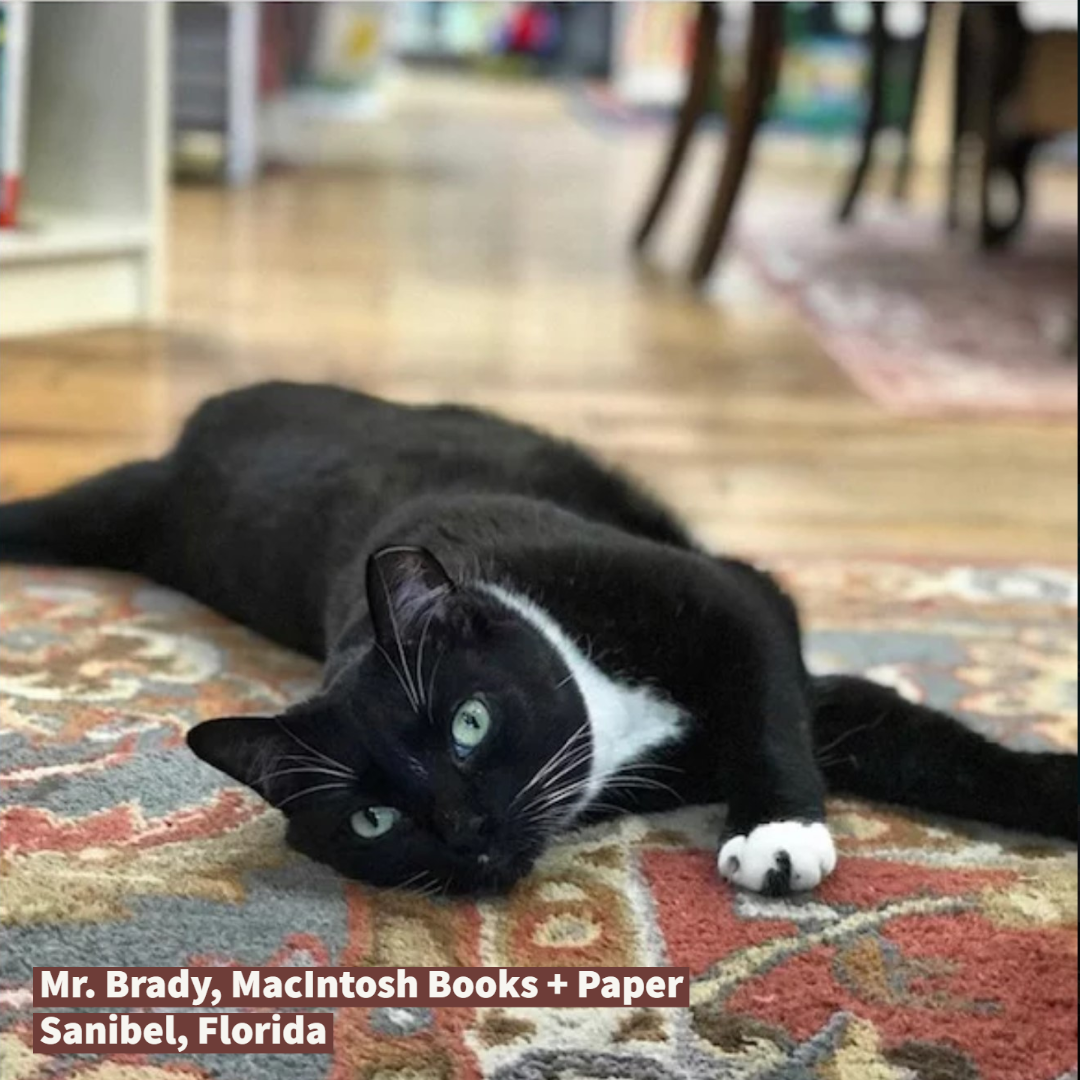
In the aftermath of Hurricane Ian, SIBA has been reaching out to its Florida bookstores for updates
on their staff and their stores. So far booksellers have reported that they and their
families and friends are safe. They are now beginning to assess the damage and make plans for reopening or rebuilding.
The bookstores on Sanibel Island faced the full force of the storm’s destruction. Owners and staff evacuated ahead of Ian’s arrival, and still have been unable to return to assess the damage. "Our entire staff are safe and off the island," Gene’s Books posted to their Facebook page, "but we are all reeling from the devastation."
"Publix is open and a few gas stations with long lines, some have gas and some don’t, but everything else is closed. Most traffic lights are out and cones reroute you to where you’ll be safest. So much debris. So much devastation. The mission
was mail, but the magic in the day was in the stories we told one another. How we endured this traumatic event, how we’re moving forward. What we hope to teach our kids, what we wish we had already known. How we still felt like we were in our twenties,
working at South Seas on Captiva, were we met nearly three decades ago. We’re sad. We’re grateful. We’re scared. We need help and we want to help. It’s the same for all of us. It was cathartic and a balm, this story session and I hope that all of
you have friends like this, even one, who lets you tell your raw, real, messy stories."
Binkowski has created a GoFundMe campaign to help with the expense of either rebuilding or relocating. "MacIntosh means a lot to me too," she posted in response to the outpouring of customer support, "and we will continue in some way…we’ll figure it out."
Posted By Nicki Leone,
Wednesday, October 5, 2022
Updated: Wednesday, October 5, 2022
updated on October 5, 2022
The SIBA Board of Directors has announced the slate for the 2022 Board Elections. This year's ballot includes two booksellers, one of whom will replace current board member John Cavalier of Cavalier House Books, whose term ends December 31, 2022.
Voting takes place between September 15- October 14, and the results will be announced on October 15.
Each SIBA bookstore that is a current member has one vote. VOTE HERE
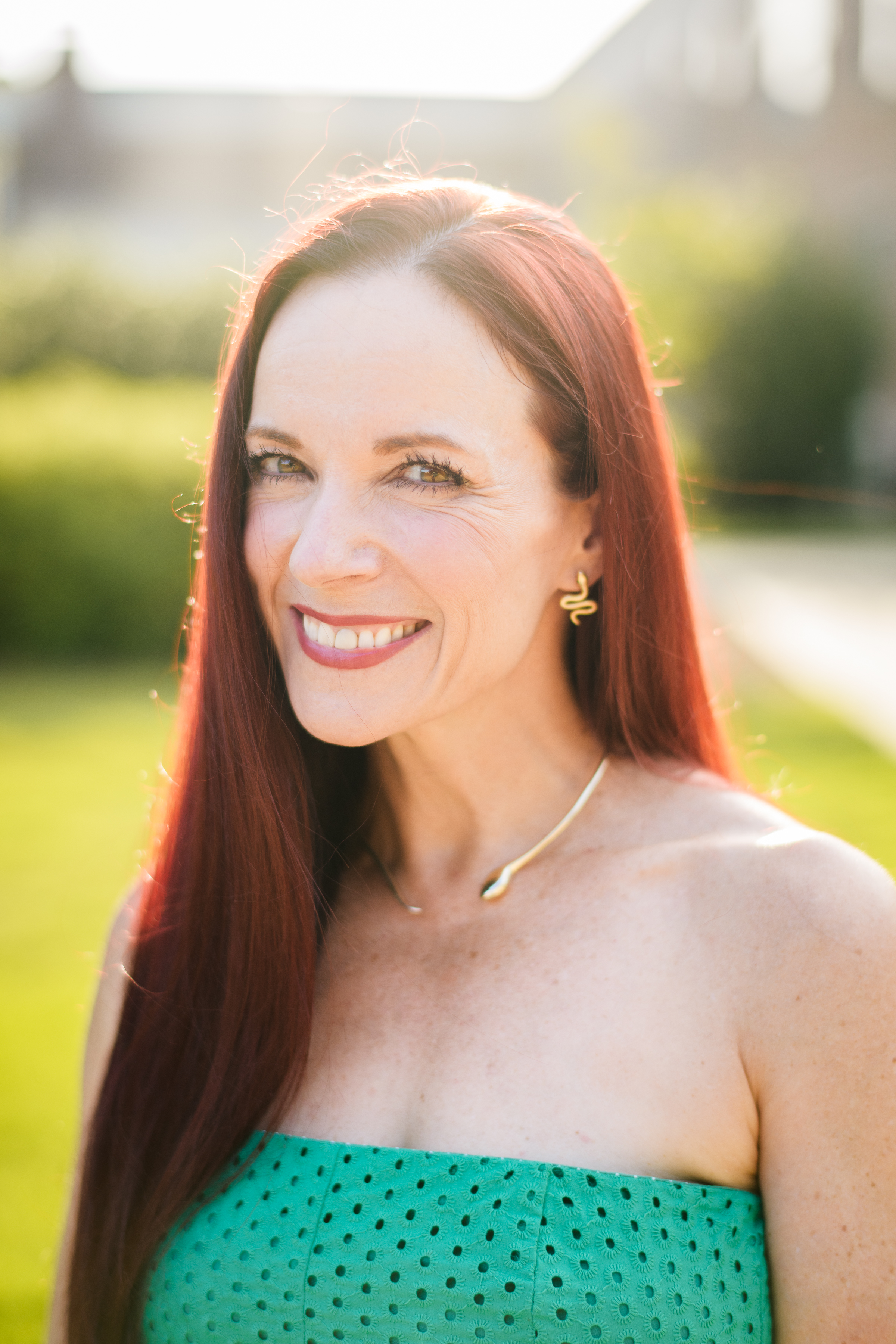
Jamie Anderson began her career in bookselling as the bookstore manager for Duck’s Cottage Coffee & Books when the business opened in 2002 and remains in that position to this day. In 2011 after Hurricane Irene devastated the Outer Banks, the bookstore anchoring downtown Manteo closed due to flood damage. Jamie answered the call from the community to bring a bookstore back and, despite the risks, opened Downtown Books in 2012 in the heart of Manteo- which also happens to be the lowest spot in town. While she tries to be storm ready at all times, the store has been flooded half a dozen times from several inches to a full two feet. She is bound and determined to stick with her location and has perfected a system for ‘moving it all up’. In the last three years Downtown Books has been named the Town of Manteo’s Small Business of the Year, was the Coastland Time’s Coastland Gold Winner for bookstores and has been voted Best of the Beach: Bookstore for three years straight.
In twenty years of bookselling she has seen, along with her peers, a lot of changes in our world, faced many challenges and watched so many of us survive and thrive! She thinks this is an exciting time to be an indie bookstore as we see a resurgence of reading worldwide. Jamie’s mantra at Downtown Books is to put the right book in the right hands at the right time; to help make her community a better place; support Dare County Schools; give authors and readers opportunities to connect; and to never judge anyone’s reading preferences.
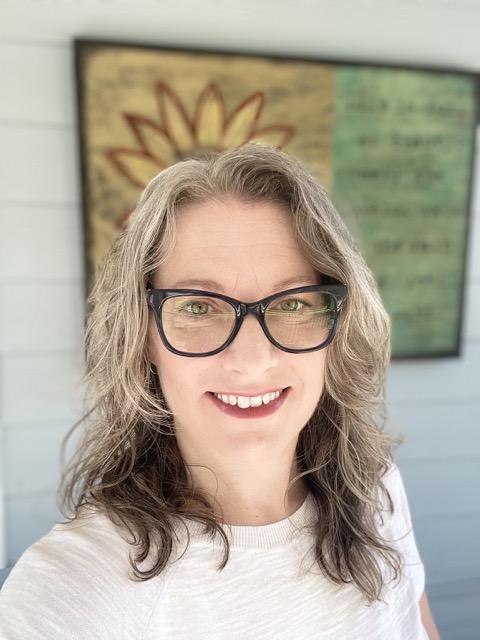
Heather Jeziorowski
Heather Jeziorowski has been in the book industry in one way or another for longer than she might care to admit at this point. Her first bookstore job puts her at "Celestine Prophecy / Bridges of Madison County" years old, in bookseller terms. Over the years she has worked for regional chain bookstores, national chains, truly tiny indie stores, and beloved local anchors in the Southeast and the Midwest. She has also had stints at a small publishing house and as an elementary school media clerk, so has had a real opportunity to see the industry from lots of different angles. Jeziorowski has been at Little Shop of Stories in Decatur, Georgia for the last 5 years as a bookseller, buyer, events coordinator, school liaison, and all the other hats that come with working in a busy indie store. She lives in Decatur with her husband, kids, cats, and houseplants, hoping her TBR pile doesn't collapse and kill them all.
Posted By Nicki Leone,
Tuesday, October 4, 2022
Updated: Thursday, October 20, 2022
The Nobel Prize for Literature has been announced, but the jury is still out on which books will be recognized as the best Southern book of the year!
Nominations for the Southern Book Prize close on October 15.
All nominations must come via a SIBA bookseller. For a book to be eligible, it must be set in the South and/or the author must be Southern (preferably both!). It must have been published within the previous calendar year.
Finalists will be announced November 1st, and voting on the winners takes place between November 5 and February 1. SIBA Bookstores and their customers are allowed to vote on the finalists ballot.
Winners are announced February 14th.
The Southern Book Prize, was created to recognize great books of Southern origin. All the finalists and winning books are promoted to the media and featured on SIBA's websites. This is a great opportunity to involve your customers and generate excitement for titles you are especially passionate about. Each year, hundreds of booksellers across the South vote on their favorite "handsell" books of the year. These are the "Southern" books they have most enjoyed selling to customers; the ones that they couldn't stop talking about.
Posted By Nicki Leone,
Tuesday, October 4, 2022
Updated: Thursday, October 20, 2022
New Voices New Rooms has rescheduled the 2022 VIndies Award Ceremony for November 16, 2022 at 7:00 PM. The decision to delay the VIndies Ceremony was made in consideration of Florida bookstores that have been impacted by Hurricane Ian. Anyone who has already registered to attend the event will have their reservation updated to reflect the new date.
127 videos were nominated for the 2022 VIndies from stores in the SIBA and NAIBA regions. Taken all together the nominations represent the range of bookseller creativity, ingenuity, and occasionally bookseller silliness. The videos document bookseller joy in sharing their love of books, their integral role in their communities, and their resilience in the face of challenges and adversity. NVNR will announce the 2022 VIndie finalists on October 15th and the winners will be unveiled at the ceremony on November 16th.
Posted By Nicki Leone,
Thursday, September 29, 2022
Updated: Thursday, October 20, 2022
Southern
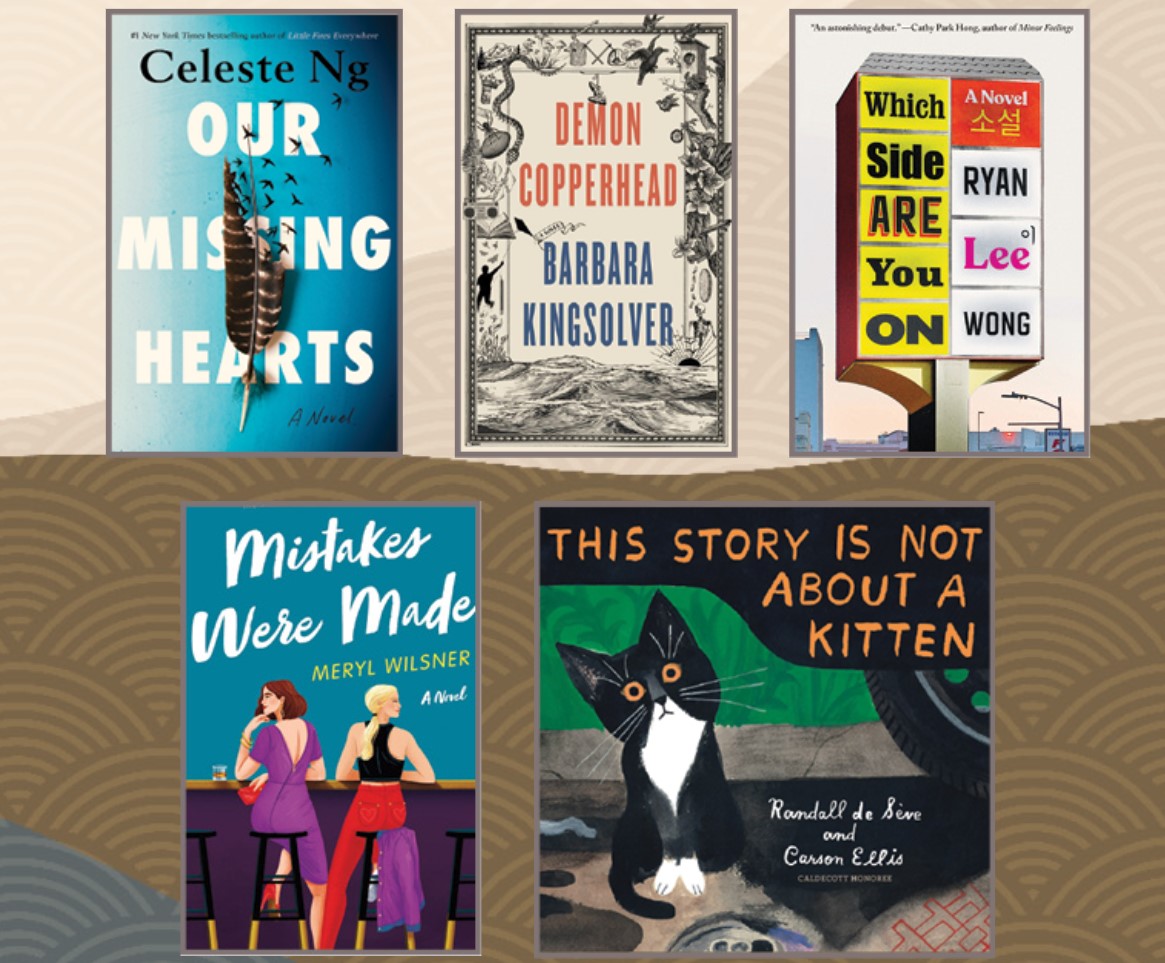
indie booksellers have selected five books, their hand-sell favorites for the upcoming month, as October 2022 Read This Next! titles. The chosen books all release in September and have the enthusiastic support of southern booksellers, This month
Read Different! Read These Next!
Demon Copperhead by Barbara Kingsolver (Harper)
A brilliant retelling of the David Copperfield story from the perspective of the poor son of a teenage mother living in rural Appalachia. From the first sentence, Demon’s voice grabs us and takes us on an unforgettable journey through his early life. This novel about a resilient boy develops empathy for families and children so frequently dismissed in the national discourse. It is a masterful American story.
–Lia Lent in Wordsworth Books in Little Rock, Arkansas
Mistakes Were Made by Meryl Wilsner (St. Martin's Griffin)
There is something that happens when you take an age old trope (age-gap or best friend's dad) and make it queer that breathes new life into the story. So many chili peppers for this book. Sheesh.
– Katie Garaby in Parnassus Books in Nashville, Tennessee
This Story Is Not About a Kitten by Randall de Sève, Carson Ellis (Illus.) (Random House Studio)
Many hands make light work, and many hearts working together can accomplish great things. This is not a story about a kitten, its a story about community, the language of caring, and of the incredible powers of kindness group effort can bring.
–Angie Tally in The Country Bookshop in Southern Pines, North Carolina
Our Missing Hearts by Celeste Ng (Penguin Press)
In addition to being an all-too-believable near-future dystopian novel in the tradition of The Handmaid's Tale, Our Missing Hearts is also a subtle call to action to those of us who recognize how essential stories and art are to freedom. Celeste Ng's previous books were terrific. This is her most important work yet.
–Frank Reiss in A Cappella Books in Atlanta, Georgia
Which Side Are You On by Ryan Lee Wong
Which Side Are You On is a dialogue-heavy book with prose that is sharp, thought-provoking, and humorous at times. The reader sees the subjects of race, policing, politics, and privilege through the eyes of a young activist as he pries into his parents’ own personal history of activism in their younger days. Filled with interesting anecdotes and hard-learned lessons, this book shows that sometimes personal growth is best attained through deep conversation and self-reflection.
–Stuart McCommon in Novel in Memphis, Tennessee
Current Read This Next! books and what SIBA booksellers have to say about them can always be found at The Southern Bookseller Review
Posted By Nicki Leone,
Wednesday, September 28, 2022
Updated: Thursday, October 20, 2022
Shopkeeper's Privilege and Racial Bias
If you have ever seen a private security guard stop to question or detail a "suspicious" person, you have seen something known in legal circles as "shopkeeper's privilege." The doctrine of shopkeeper's privilege states that in this situation, a shopkeeper defendant who reasonably believes that the plaintiff has stolen or is attempting to steal something from the defendant shopkeeper may detain the plaintiff in a reasonable manner for a reasonable amount of time to investigate. (via)
Unsurprisingly, the decision of who to target and detail is often influenced by racial bias. According to a study commissioned by the Sephora Beauty Retailer (in response to reports of discrimination by Sephora's own staff), fully 40% of customers in US retail stores experience unfair treatment based on their race, ethnicity, or skin tone.
This includes everything from being passed off or ignored by store staff to being the object of suspicion and subject to false accusations. The report concludes that there is "an invisible tax" on BIPOC and Indigenous shoppers, who struggle to find the products they need and to get assistance from store staff. It also determined that there is a pattern of exclusion created in store policies which results in certain kinds of customers being categorized as "less desirable" and therefore unwanted.
And it identified five "Truths" that perpetuate and shore up this racial bias in retail stores:
1. Limited racial diversity across marketing, merchandise, and retail employees results in exclusionary treatment before U.S. BIPOC shoppers even enter a store and continues across their in-store journey
2.U.S. BIPOC shoppers feel in-store interactions are driven by their skin color and ethnicity, yet retail employees cite behavioral attributes, rather than appearance, as the basis for their interactions
3 U.S. BIPOC shoppers use coping mechanisms to minimize or avoid anticipated biased experiences when in-store. While many customer experience needs are universal, BIPOC shoppers have some needs that hold greater importance in helping them feel welcome
4 The majority of U.S. BIPOC shoppers do not voice concerns about negative shopping experiences directly to retailers, creating missed opportunities for feedback and improvement, and impacting future sales as shoppers take their business elsewhere
5 Meaningful and long-term action is most important to U.S. shoppers and retail employees who want to see the company’s words supported by consequential action
"Meaningful and long-term" is a difficult experience to foster when, as the report states, four out of five retail shoppers have trouble finding a sales associate that looks like them or is familiar with their needs, and two out of three cannot even find someone who speaks their native language.
Recently Sephora, along with 17 other retail groups signed the Mitigate Racial Bias in Retail Charter, a pledge and a commitment to take "concrete steps to ensure a more welcoming environment for all by reducing racially biased experiences and unfair treatment for shoppers."
This means dismantling many long-standing policies that unfairly target BIPOC shoppers, as well as committing to increasing diversity in marketing and hiring; providing better feedback mechanisms; tracking the company's progress towards its inclusivity goals; and providing ongoing and regular anti-racism training.
Posted By Nicki Leone,
Thursday, September 22, 2022
Bans on Truth
The upswell in book banning and book challenges in the past couple of years has been a source of increasing alarm in the book industry, especially since the targets of the challenges have been focused specifically on LGBTQ+ books and books ostensibly about "Critical Race Theory" -- a term that has come to mean any book dealing with systemic racism or racial justice.
"Today’s anti-CRT movement epitomizes yet another dangerous and anti-democratic effort to suppress and deny the voices, power, and lived experiences of Black and Brown people in America. Now the target is the truth," notes Ishena Robinson of The Legal Defense Fund.
In an article analyzing how book bans have been weaponized, Robinson points out the number of gag orders that have been implemented by local, state, and even federal agencies that prevent them from addressing or even discussing systemic racism. In September 2020 President Trump created the "Equity Gag Order" (revoked in January 2021 by incoming President Biden), which then spawned copycat bills at the state level, which have been passed in many states in SIBA territory: Alabama, Arkansas, Florida, Georgia, South Carolina, Tennessee, and Virginia have all passed similar bills, and these have restricted the way American History can be taught or discussed in classrooms, and have imperiled teachers, librarians, and students.
Books about the Civil Rights Movement are frequent targets of book bans on the basis they promote critical race theory. Ruby Bridges Goes to School, about one of the first African American students to attend an all-white New Orleans public school, was challenged for its portrayal of the "large crowd of angry white people who didn't want Black children in a white school" and its lack of "redemption" for them.
The fact is, book bans are no longer about a few parents concerned about swear words or sex scenes in the books on the high school reading list. They are an important tool to stop people talking, and fundamentally anti-democratic.
2021 was a record year for book bans. The American Library Association reported more than 729 attempted bans of 1,597 individual books. Sadly, 2022 will probably surpass those figures.
For most of us, this week is Banned Books Week. What we need is a Banned Books Year.
Raising Kids Who Choose Safety by David C. Schwebel
Parenting Press, dist. by Chicago Review Press
September 20, 2022
9781641607926
Trade Paperback
$18.99 USD
Family & Relationships / Parenting
Health & Fitness / Children's Health
Among US children ages 1 to 14, injuries cause more deaths than all other causes combined. Raising Kids Who Choose Safety addresses the severity of accidental injury as a child-health concern and introduces a groundbreaking new method, TAMS: Teach, Act, Model, Shape. This simple, step-by-step plan based on the latest scientific research instills a culture of safety in the household. Practical injury-prevention advice is presented by every developmental stage. Injury topics include sports injuries, time with babysitters, during holidays, and much more. Parents learn how to create safety in their household by modeling safe behavior, teaching children rules and skills to stay safe, and modeling a culture in which safety is practiced automatically by all family members. Raising Kids Who Choose Safety helps families avert tragedy, prevent the preventable, and stay injury free.
Posted By Nicki Leone,
Thursday, September 22, 2022
In June 2021, as part of SIBA’s commitment to our planet’s environmental health, SIBA prioritized a vegetarian menu as the primary option at in-person gatherings. Gluten-free vegan meals will also be served, and meat options available by special request. To further reduce our carbon footprint and support local farmers, SIBA works with hotel and restaurant partners to locally source as much of the menu as possible. Perhaps surprising to readers, a vegetarian menu is not a cost-savings, as host venues consider it “custom,” and food prices have risen considerably during Covid. To support accessibility and keep overall event pricing as low as possible, SIBA has been subsidizing food costs (and bus tours) for booksellers.
SIBA’s first opportunity to offer a vegetarian menu was at our spring gathering in Winston-Salem, NC. We partnered with Foothills Brewing, owners of our host venue, Footnote. We were their first client to ask for a completely vegetarian menu, and we worked closely with them to create a custom menu of appetizers and desserts for our welcome reception. We ordered more options and greater quantities than the venue suggested for our crowd, and we still had to order more that evening to meet demand.
Our recent gathering in New Orleans involved two receptions, one meal, and a snack bar (during our afternoon session of education). The Historic New Orleans Collection (THNOC) hosted our welcome reception and they happily agreed to our request for a vegetarian menu. They worked with Chez Nous, a local gourmet catering company, to provide an array of sweet and savory appetizers that included vegan and gluten-free treats. The spread was delicious and delightful, with twists on familiar items, like hummus made with avocados, and phyllo-wrapped asparagus. We arrived early and were able to sample most items. We gave THNOC and Chez Nous two thumbs up!
We worked more closely on the menu with the Sheraton which hosted our luncheon and Authors & Aperitifs reception. They only had one vegetarian choice for lunch. Although we came up with a vegan, gluten-free alternative, we also learned from bookseller feedback that we need to bring more variety into the mix (including one choice that is mushroom-free), and be assured, we will!
We added a snack bar to the afternoon education event, knowing brainy work like examining P & Ls, or learning about time-saving apps, needs sustenance. We chose a snack bar that offered fresh and dried fruit, mixed nuts, and sweet treats like M&M's, and urns of coffee, and hot water for tea.
So far response to our vegetarian menus has been very positive from booksellers, but we do want to hear from you on ways to meet your needs, if they haven’t been met so far. We provide special meals upon request, though no requests have yet been made.
We are also pleased to share that the ABA has now adopted prioritizing a vegetarian menu at their upcoming Winter Institute and credits SIBA for leading the way.
Posted By Beth Ann Fennelly,
Thursday, September 22, 2022
I’m lucky enough to live in Oxford, MS, home of Square Books, and you’d better believe I hang out there all I can, so I’m pals with the folks who work there. One of them, Ted O’Brien, I’ve known a long time. I first met him in New Orleans, when I did an event at Garden District Books, where he’d worked for years. He was displaced from New Orleans during Hurricane Katrina in 2005 and started working at Square Books, where we resumed our acquaintanceship. Ted now lives in Germantown, TN, near Memphis, and commutes to Oxford (about an hour) to the bookstore a mile from my house.
This summer, outraged by the proposal that the solution to school shootings is for teachers to carry guns, I wrote a guest essay for The New York Times. It was published online August 8, and that was a big thrill for me (I’m mostly a poet, which means my “readership” is generally limited to my mom). I loved reading the comments in the comments section (well, MOST of the comments) but for someone who’s partial to the physical, the digital version was nice but just a lead-up to the day the print version appeared. I also needed the print version for my 82-year-old mother, who “doesn’t believe in the internet.” Luckily, Square Books gets the Sunday paper. I contacted the store and arranged for Ted to put aside two copies for me.
But then I heard from my editor that my piece had been bumped from Sunday to the Wednesday edition. I emailed Square Books to cancel my hold on the Sunday edition and explained why. How could I possibly get a paper copy now, I fretted. Ah, no worries, Ted emailed back; he would stop by a place in Memphis that sells them, then bring them to Square Books. When I went to pick them up, they were behind the counter, marked “No charge.” The whole experience reminded me yet again why I love Indie bookstores in general, and my beloved Square Books in particular. Like the Santa from Miracle on 34th Street advising customers to shop at Kimballs when Macy’s couldn’t provide a certain desired toy, Ted had procured my paper copies by stopping by the Germantown Barnes and Noble. I went upstairs to find Ted and thank him, and snapped this photo of him behind the coffee bar. Thanks, Ted. Thanks, Square Books. Thanks, independent bookstore owners.
Beth Ann Fennelly, the poet laureate of Mississippi from 2016-2021, teaches in the MFA Program at the University of Mississippi. Fennelly has published three books of poetry and three of prose, most recently, Heating & Cooling: 52 Micro-Memoirs, which was a 2018 SIBA Southern Book Prize finalist and an Atlanta Journal Constitution Best Book. She lives with her husband, Tom Franklin, and their three children in Oxford, MI. www.bethannfennelly.com/
Posted By Nicki Leone,
Thursday, September 22, 2022
Registration is now open to attend the 2022 VIndies Awards, which will be held on October 13th at 7:00 PM ET on Zoom. Come and celebrate the creativity and joyful (and often hilarious) spirit of your fellow booksellers. Register here
Booksellers and fans of their bookstores have nominated 127 videos for the 2022 awards. The finalists will be announced October 3rd, and winners at the Awards Ceremony.
The VIndies were launched in 2021 by New Voices New Rooms, the collaborative partnership for virtual and hybrid programming created by the New Atlantic Booksellers Association (NAIBA) and the Southern Independent Booksellers Alliance (SIBA). To be eligible, videos must have been created by a SIBA or NAIBA member bookstore and must have been publicly exhibited – appearing on the store’s website, in their social media channels, or in their store newsletters — between October 2021 and October 2022. For its second season, The VIndies have expanded the categories videos may be submitted for. Added for 2022 are:
“Around the Store” for videos showcasing a bookstore’s shop floor and storefront
“Community Work” for videos documenting bookstores’ engagement with their community
“Staff Picks & Book Recommendations” for store videos focused on specific book recommendations
“Trending Sounds,” acknowledging the growing popularity and unique character of TikTok videos which use viral “trending” sounds and music
Posted By Nicki Leone,
Thursday, September 15, 2022
Updated: Thursday, September 22, 2022
Hispanic? Latino? Latinx?
National Hispanic Heritage Month, also sometimes known as Latino Heritage Month, is September 15 - October 15. It honors the cultures and contributions of both Hispanic and Latino Americans as we celebrate heritage rooted in all Latin American countries.
The celebration originally began as a commemorative week introduced by California Congressman George E. Brown in June 1968 as a part of the Civil Rights Movement, and was officially commemorated for mid-September, chosen because it is the anniversary of independence for Latin American countries Costa Rica, El Salvador, Guatemala, Honduras and Nicaragua. In addition, Mexico and Chile celebrate their independence days on September 16 and September18, respectively. Also, Día de la Raza, which is October 12, falls within this 30 day period.
The terms Hispanic, Latino, and Latinx are often used interchangeably -- especially by white people -- but they actually have different meanings, and which term you choose depends on how people self-identify.
“Hispanic” denotes people ethnically from Spanish-speaking countries in Latin America and Spain.
“Latino,” or the feminine “Latina,” is used to describe people with ancestry from Latin American countries. Unlike "Hispanic, it doesn't mean those countries are Spanish-speaking. It can include people from Brazil (Portuguese) or Haiti (French) or those from indigenous cultures in Latin America, which number in the millions.
"Latinx" is a more recent term meant to be gender neutral, and is often used by LGBTQ+ communities. It is also sometimes criticized because it does not follow Spanish grammar.
(via salud)
Which term used often depends on personal choice. The Federal Government uses "Hispanic" on Census forms, and officially recognizes "Hispanic Heritage Month". But many people who might fall under that category choose to represent themselves according to their family country of origin: Mexican-American, Cuban-American. Or simply according to their ancestral ethnicity -- Mexican, Cuban, Dominican.
Still, "Hispanic" is also the term most commonly used by the people in question it is meant to designate. It is not a neutral word, however. Even setting aside the fact it has basically been imposed by the US Government for the purposes of taking the Census, the origin of the word is an anglicized version of "Hispano", meaning a person whose cultural traditions originate from Spain.
That immediately erases the complex cultural reality of Latin America, including the rich indigenous traditions and pre-Columbian cultures that are now inextricably mixed with the cultures of colonizing forces. It also ignores the African heritage of those with enslaved ancestors, whose history is actually one of resistance to Spain and European colonization.
Mario T. Garcia, professor of Chicana and Chicano Studies at the University of California in Santa Barbara recently said in an interview with NPR that people in the US lack a good understanding of the stories and history of Hispanic people. "Too often the focus is on the musical contributions or dancing or other happy artforms." Whereas stories of oppression or injustice are ignored.
Luckily, booksellers are experts at collecting and recommending stories. Remember, when you are creating your displays and reading lists, just how many different kinds of stories there are Latinx, or Hispanic, heritage.
Posted By Nicki Leone,
Thursday, September 15, 2022
Updated: Thursday, September 22, 2022
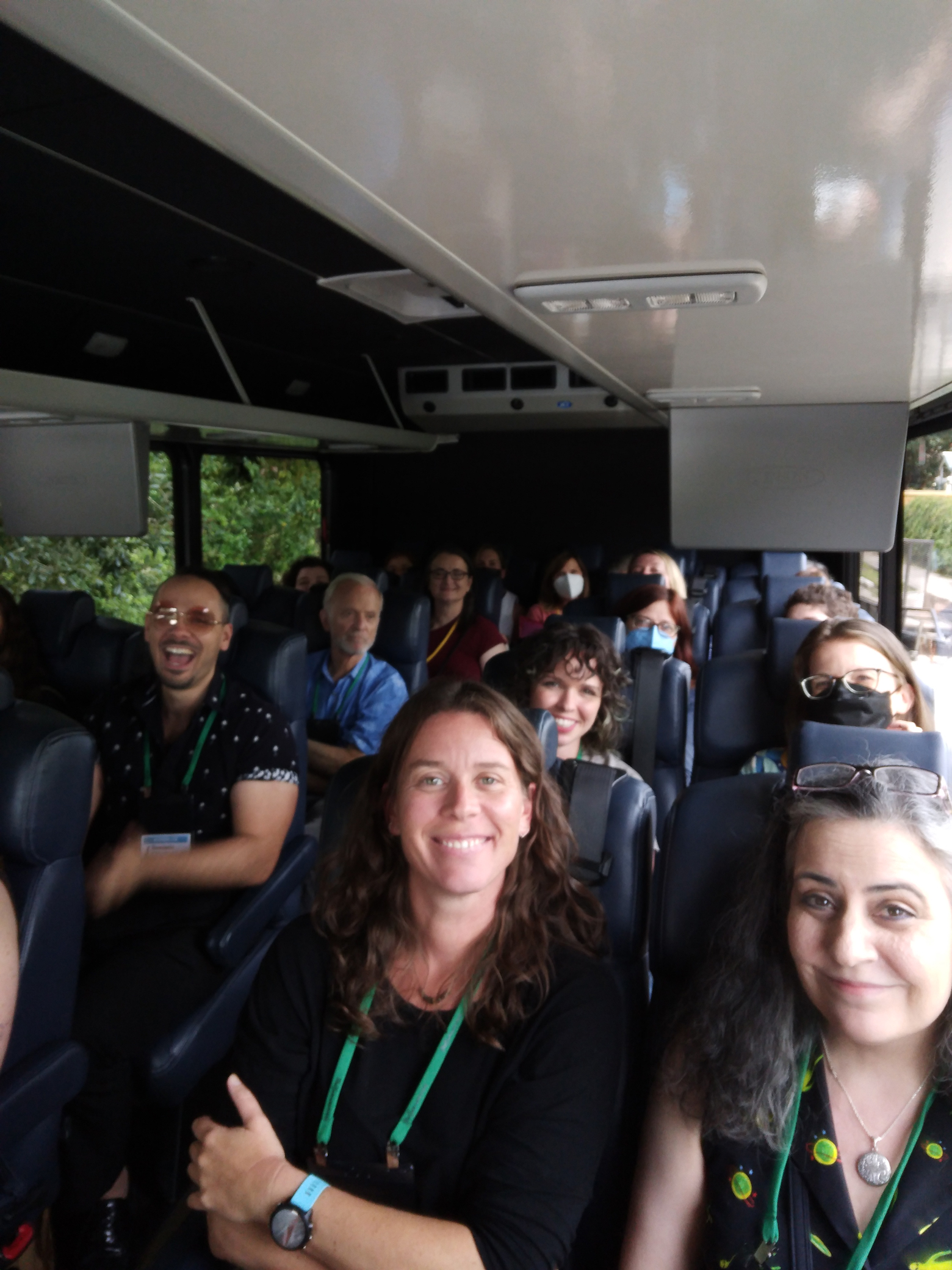
Excitement was high at SIBA's two-day conference in New Orleans last week. Over 100 people including almost 70 booksellers from 37 different bookstores across SIBA's territory came together for SIBA's largest gathering since the beginning of the pandemic three years ago.
That booksellers were eager to meet in person became clear when all the events in the program sold out in advance well ahead of the registration deadline. So many people were interested in the now de rigeur bookstore tour that SIBA had to add a second bus. Even so, the tour quickly filled up and SIBA was forced to implement its first-ever wait list for an event!
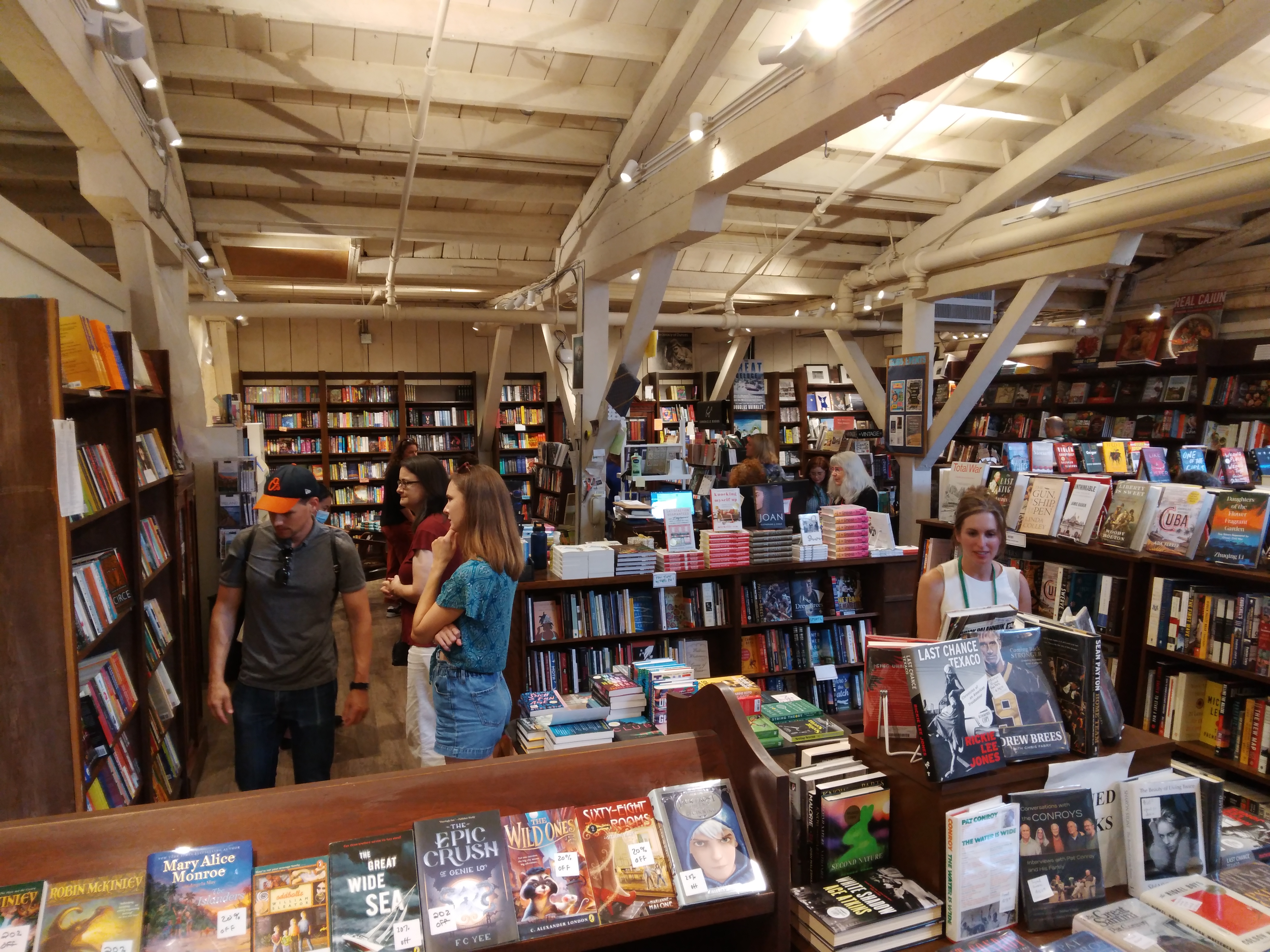
The first day of the two day conference was dedicated to experiencing a bookseller's New Orleans -- beginning with a tour of four NOLA bookstores, Octavia Books, Tubby & Coo's Mid-City Bookshop, Garden District Bookshop, and Baldwin & Co. It was especially encouraging to see expansion plans in the works for some of the stores. A number of people remarked on the positive outlook the NOLA stores had towards the future and the plans they were making to grow their businesses.
After the tour, and in keeping with SIBA's commitment to showcase the historical significance of the community hosting them, booksellers attended a "Welcome Reception" at The Historic New Orleans Collection. HNOC is a museum, publisher, and bookstore which SIBA members were already familiar with from Fatima Shaik's Reader Meet Writer presentation of Economy Hall, which they published. They also produced the video which received special mention at last year's inaugural VIndies Awards, "We Are the Holy Ones." As a special surprise poet Kelly Harris-DeBerry, who wrote the poem featured in the video, was in attendance.
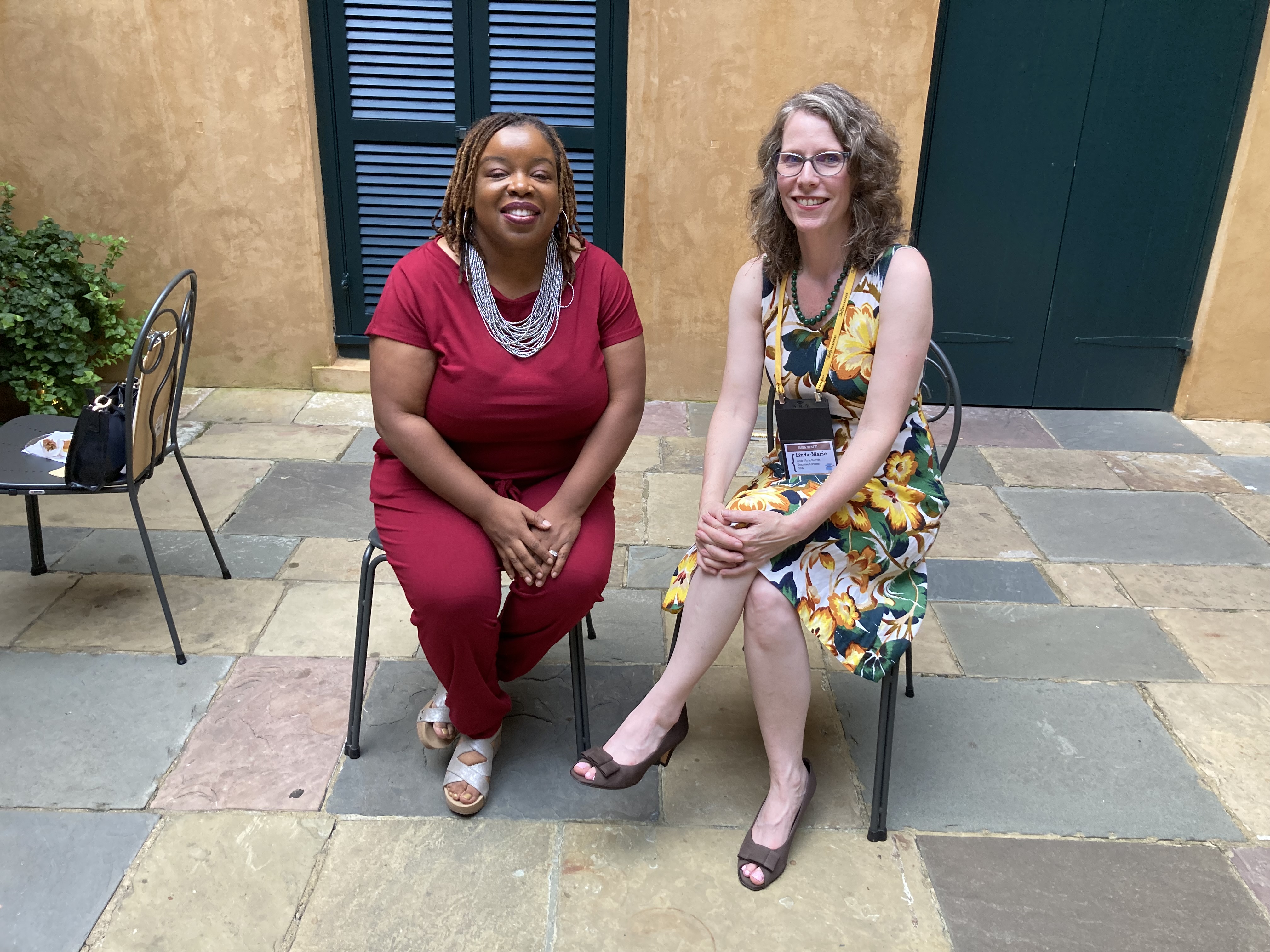
Kelly Harris-DeBerry and Linda-Marie Barrett
Booksellers heard from the new SIBA Board President, Jamie Southern, ABA CEO Allison Hill, and Binc Director of Development Kathy Bartson, each of whom spoke about their delight to be there in person, and to emphasize the continued importance of bookstore engagement. Southern spoke about the SIBA Board's current work on redefining their core membership and asked booksellers to get in touch with the board to voice their opinions and concerns and to attend the forthcoming town hall. Hill talked about plans for the upcoming Banned Books Week, and encouraged booksellers to sign the petition posted on their website. Bartson discussed some of the ways the organization has helped booksellers facing crises, and provided a preview of a new initiative to help bookstores to open in under-served communities.
Day two of the conference was dedicated to education, with breaks at lunch and at the end of the day to hear from authors with books launching this fall and in 2023. The education itself was pragmatic in focus. The session led by Jill Hendrix, owner of Fiction Addiction in Greenville, SC) "Bookselling A Hero's Journey" concentrated on creating a positive work environment for both yourself and your co-workers, and thus creating a staff that is trusted, resilient, and creatively engaged:
“Jill Hendrix was awesome! I felt like I got a really great handle on big picture management and how to make communication and positivity tangible.”
Angela Trigg (owner of The Haunted Book Shop in Mobile, AL) and Shari Stauch ( owner of Main Street Reads in Summerville, SC) provided a whirlwind tour into the apps and platforms they find useful in increasing productivity and -- more importantly -- saving time:
“Incredible, gave enough info for us to know if we want/need to look further, TONS of resources. Carefully planned and well-presented. SO GOOD”
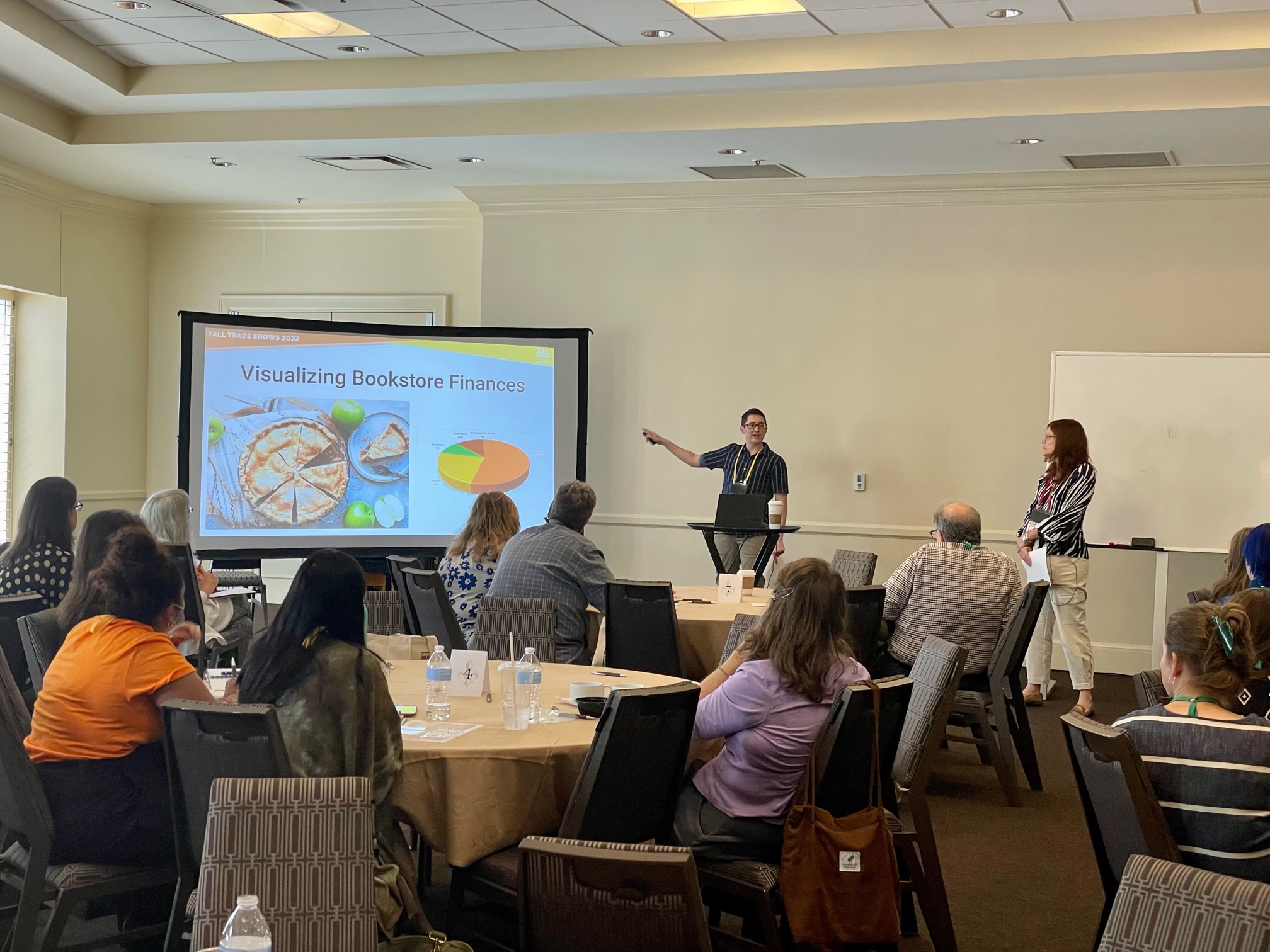
The American Booksellers Association did a deep dive into understanding Profit & Loss statements, an un-sexy topic that booksellers described as "fun and engaging" as they left: "The presenters killed it! Making a P & L session fun and engaging sounds impossible but I could listen to those two present anything-learned so much and loved every minute."
The day ended with a bookseller-to-bookseller "what's working" idea exchange led by booksellers from eight NOLA bookstores -- a session attendee wanted to go longer: “I love this-we all do amazing things and need more opportunities to share our brilliance!
"Sharing our brilliance" is perhaps the best description of SIBA in New Orleans.
The SIBA Board invites all members to attend the 2022 SIBA Annual Meeting and Town Hall on October 11, 2022 at 1 PM, Eastern, on Zoom. The meeting will include a report on the State of SIBA. The Board will report on the work being done on behalf of the membership, and the results of the 2022 Board ballot will be announced. There will also be time for questions from attendees.
SIBA members who would like to propose a topic or raise an issue for the board's consideration can submit it in advance here. All submitted topics will be provided to the board, even if they are not addressed during the meeting.
The book industry in the (almost) post-pandemic world has been evolving at a rapid rate. New issues, new problems facing small businesses, and new priorities as bookstores transition into new business models...it is vital that SIBA members take every opportunity to let their board and the SIBA staff know what they need to be successful in this new and innovative climate. Every booksellers should this opportunity to talk directly with the people who are representing them in the industry.
Posted By Nicki Leone,
Thursday, September 1, 2022
Updated: Thursday, September 22, 2022
The Anti-Racist Bookshelf: How to Read Now by Elaine Castillo
Are you a bad reader? Probably.
In the aftermath of the murder of George Floyd, booksellers well remember the sudden demand for books about fighting racism. Bestseller lists were dominated by titles like Ibram X. Kendi's How to be an Anti-Racist, White Fragility by Robin DiAngelo, The New Jim Crow by Alexander Michelle, Me and White Supremacy by Layla F. Saad. Books sold out overnight. Publishers struggled to reprint in the midst of the pandemic. Black-owned bookstores received avalanches of orders from house-bound readers who, if prevented by lock down from doing anything else, could at least do this: read.
Booksellers know books change peoples' lives. That is one of the reasons they are booksellers. Booksellers also know that books are not pills: you don't take two to cure your existential headache. Books, the questions they ask of us, jump start the process of change. It is still up to us to do the work of changing.
The books listed above no longer dominate the bestseller lists, but new books are being published every season for the committed reader's Anti-Racist bookshelf. One of the most exciting to be released this summer is How to Read Now by Elaine Castillo.
"White supremacy makes for terrible readers, I find." is the often-quoted opening line to Castillo's razor sharp analysis of how white culture reads non-white writers, artists, and people. "When I say white supremacy makes for terrible readers, I mean that white supremacy is, among its myriad ills, a formative collection of fundamentally shitty reading techniques that impoverishes you as a reader, a thinker, and a feeling person; it's an education that promises that while swaths of the world and their liveliness will be diminished in meaning to you. Illegible, intangible, forever unreal as cardboard figures in a diorama."
When Castillo talks about reading, she is not just talking about books. She uses the verb "to read" in its larger sense -- the way we use it to, say, "read a room," "read the writing on the wall," "read a situation." That is, to engage with, to interpret, to understand. And despite her insistence that she did not write this book to "make better white people," it is nevertheless a heartwarming, wrenching, furiously funny account of all the ways white supremacy trains white people to fail at all those things.
How to Read Now takes aim at a number of comfortable but faulty truisms book people often tell each other, as evidenced by the titles of her chapter titles:
"Reading Teaches Us Empathy, and Other Fictions"
"The Limits of White Fantasy"
"Main Character Syndrome"
"What We Talk About When We Talk about Representation."
"The problem is," she notes at one point, "if we need fiction to teach us empathy, we don't really have empathy, because empathy is not a one-stop destination: it's a practice, ongoing, which requires work from us in our daily lives, for our daily lives--not just when we're confronted with the visibly and legibly Other." That is, books by people of color are not "ethical protein shakes" for white people and they are not written so white people can learn things, as what Castillo calls, unforgettably, "the gooey heart-porn of the ethnographic."
In other words, white readers tend to read writers of color for their specific experiences. But they read other white readers for their sense of the universal. That is reading as a white supremacist.
Castillo's ruthlessly close reading of everything from Joan Didion to The Watchmen to our current cinematic near-deification of Jane Austen stories is a joy and a pleasure to read. But the real take-away from the book is the question Castillo constantly asks:
"Who is this written/filmed/created for?"
The answer is usually "straight white people." We need to change that.
"How to Read Now is a battle cry. Incisive, provocative, humorous, brilliant — Castillo does not pull her punches. When the first essay opens with "White supremacy makes for terrible readers, I find" you KNOW you're in for an excellent collection of essays! If you are reading this, pretend I am standing next to you shoving this book in your hands because I seriously believe every reader and every writer would benefit from reading How to Read Now. This book is a big fat fuck you to the settler colonial narratives steeped in white supremacy that have taken up space for far too long. Seriously, you will not be the same after reading How to Read Now." --Christine Bellow, Loyalty Books, Washington D.C.
Posted By Nicki Leone,
Thursday, September 1, 2022
Updated: Thursday, September 22, 2022
Compliments of Fountain Bookstore in Richmond, Virginia!
SIBA promotes six new books every month to readers, the customers of our member stores, in our Southern Bookseller Review Bookshelf promotion. These titles appear at the top of our weekly SBR newsletter. We also feature them on our SBR Facebook page, with buy links promoted to our 15,000 Facebook friends, and on our Instagram and Twitter accounts. A different member store is featured with the titles on every new shelf. This month's Shelf is sponsored by Fountain Bookstore.
For publishers looking to promote their new titles out to readers across the South, the SBR Bookshelf is our greatest value because of high visibility and engagement across multiple platforms. Contact us for more information or to get your titles on “The Shelf” in coming months.

 Blog Home
 All Blogs
 RSS
RSS October 24, 2022 at 7:00 PM Eastern
 In the aftermath of Hurricane Ian, SIBA has been reaching out to its Florida bookstores for updates
on their staff and their stores
In the aftermath of Hurricane Ian, SIBA has been reaching out to its Florida bookstores for updates
on their staff and their stores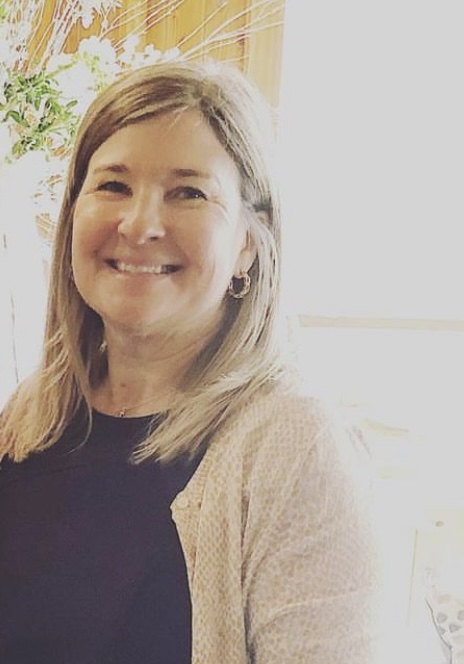 Jamie Anderson
 Heather Jeziorowski
 The Nobel Prize for Literature has been announced, but the jury is still out on which books will be recognized as the best Southern book of the year!
 New Voices New Rooms has rescheduled the 2022 VIndies Award Ceremony for November 16, 2022 at 7:00 PM. The decision to delay the VIndies Ceremony was made in consideration of Florida bookstores that have been impacted by Hurricane Ian. Anyone who has already registered to attend the event will have their reservation updated to reflect the new date.
 Shopkeeper's Privilege and Racial Bias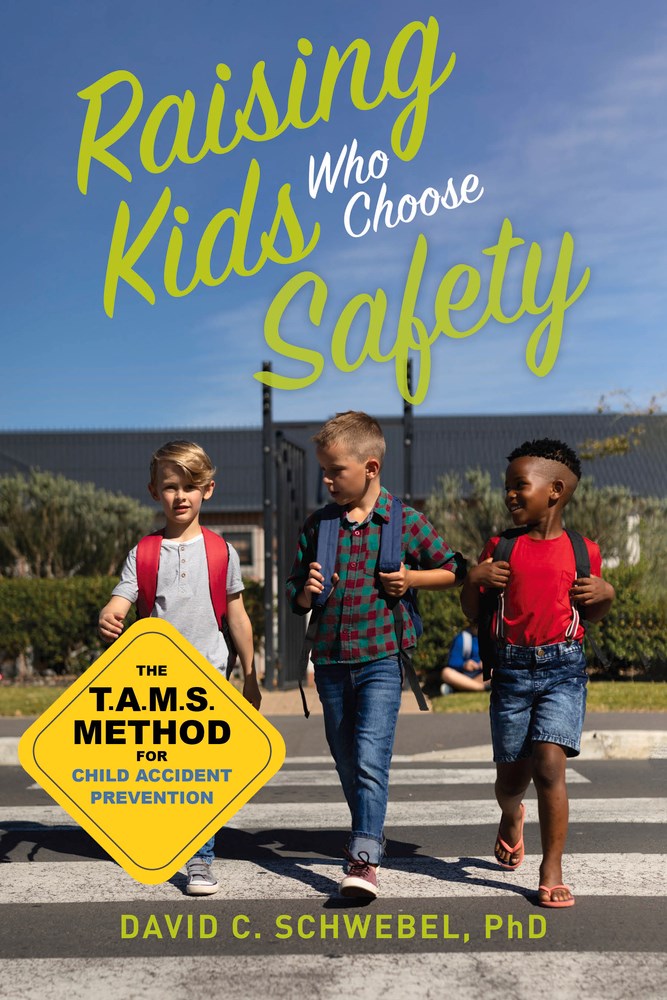
 In June 2021, as part of SIBA’s commitment to our planet’s environmental health, SIBA prioritized a vegetarian menu as the primary option at in-person gatherings. Gluten-free vegan meals will also be served, and meat options available by special request. To further reduce our carbon footprint and support local farmers, SIBA works with hotel and restaurant partners to locally source as much of the menu as possible. Perhaps surprising to readers, a vegetarian menu is not a cost-savings, as host venues consider it “custom,” and food prices have risen considerably during Covid. To support accessibility and keep overall event pricing as low as possible, SIBA has been subsidizing food costs (and bus tours) for booksellers.
 I’m lucky enough to live in Oxford, MS, home of Square Books, and you’d better believe I hang out there all I can, so I’m pals with the folks who work there. One of them, Ted O’Brien, I’ve known a long time. I first met him in New Orleans, when I did an event at Garden District Books, where he’d worked for years. He was displaced from New Orleans during Hurricane Katrina in 2005 and started working at Square Books, where we resumed our acquaintanceship. Ted now lives in Germantown, TN, near Memphis, and commutes to Oxford (about an hour) to the bookstore a mile from my house.
 Registration is now open to attend the 2022 VIndies Awards, which will be held on October 13th at 7:00 PM ET on Zoom. Come and celebrate the creativity and joyful (and often hilarious) spirit of your fellow booksellers.